Grandma Mabel A working cookbook, not a picture book
You did everything the recipe said.
It still tastes like nothing.
Nine times out of ten it is not too little salt — it is the right salt at the wrong time. Four hundred recipes, and the ten chapters underneath them that nobody ever wrote down.
Instant download · Yours forever
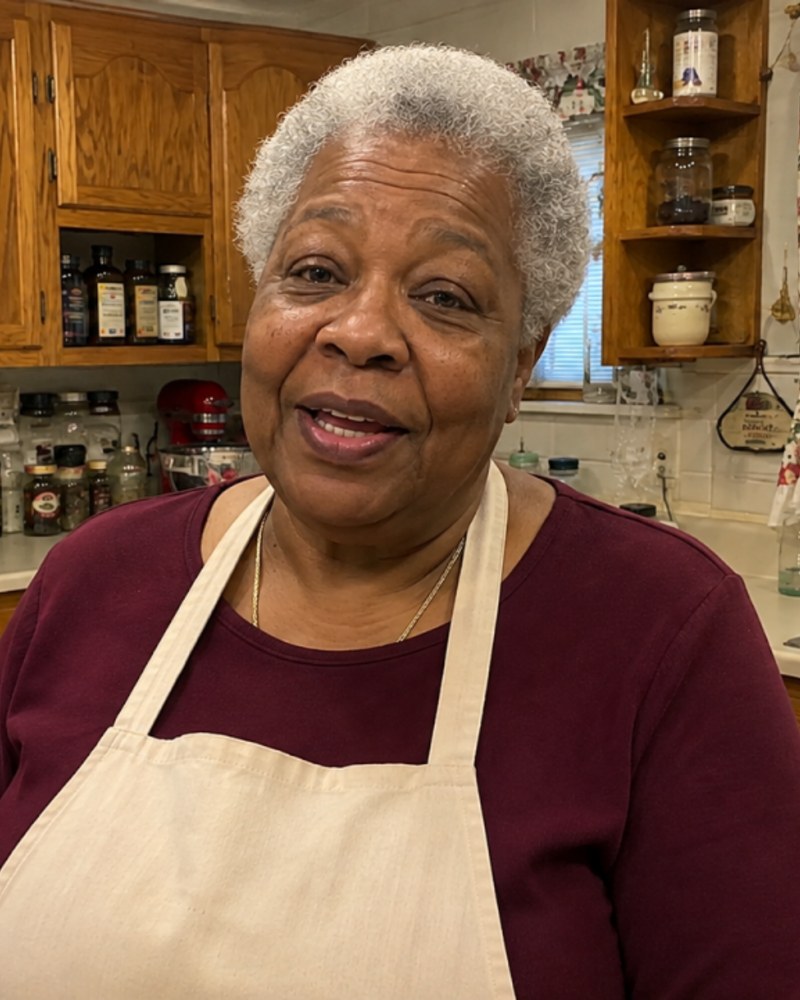
“Not to replace the grandmother. To write down what she would have shown you.”
— Before You Begin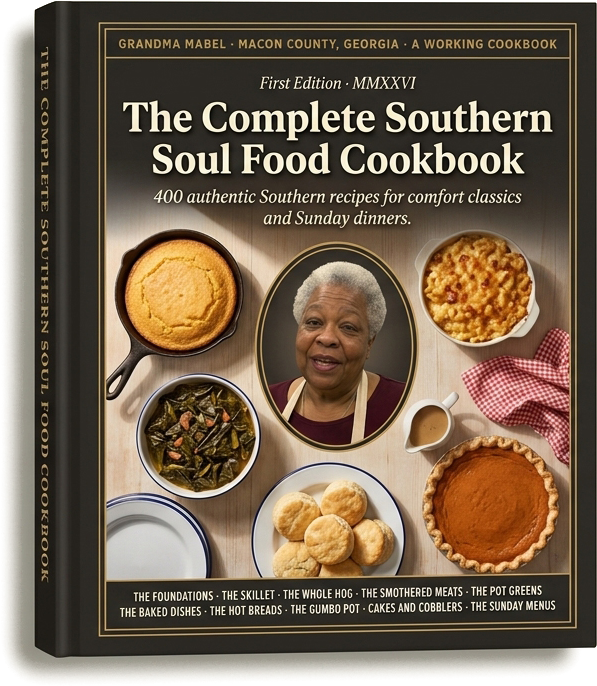
Section I · The Cookbook
The things around the recipe
I have watched too many good cooks stand in a kitchen with everything they need on the counter and still turn out a flat plate — because nobody ever told them the four or five small things that make the difference.
Not the recipe. When to salt. What fat to reach for. Why the chicken went soft ten minutes after it came out of the pan. Those things did not get written down, because the women who knew them were teaching with their hands and not with a pencil, and when they went, a great deal went with them.
“This is a working cookbook, not a picture book. Every recipe in here has a real ingredient list, a real method, and a real outcome on a real table.”
Four hundred recipes numbered straight through, grouped in twenty sections of twenty. Ten short technique chapters up front. And where one recipe leans on another, or on a foundation chapter, it says so by number so you can turn straight to it.
Section II · The Difference
Same ingredients. Different plate.
Every line on the right is a chapter in this book, with the reason written out.
Section III · What's Inside
140 pages, in two parts
Part One is the education. Part Two is the practice — four hundred recipes, numbered 1 to 400.
Part One — The Foundations
Ten short chapters to read before you cook anything. Twenty-odd pages, and the whole education.
- Chapter OneWhy your food tastes flat: the seasoning order
- Chapter TwoThe grease jar — what each cooking fat is for
- Chapter ThreeWhy fried chicken goes soggy, and how to keep it crisp for hours
- Chapter FourPot likker and the long simmer
- Chapter FiveThe custard rule, behind half the dessert table
- Chapter SixCast iron: bare metal to Sunday cornbread
- Chapter SevenSmoke without a smokehouse
- Chapter EightThe Sunday timetable: getting it all hot at once
- Chapter NineDoneness by hand, eye and thermometer
- Chapter TenCooking for twenty: the church kitchen method
Part Two — The Four Hundred
Twenty sections of twenty recipes each. Every one laid out the same way, so you can find your place at a glance.
- IFried Chicken & the Skillet BirdsRecipes 1–20
- IIPork Chops, Ribs, Ham & the Whole Hog21–40
- IIIBeef, Oxtails & the Smothered Meats41–60
- IVCatfish, Fish & the Shrimp Pot61–80
- VCollards, Turnips & the Pot Greens81–100
- VIBeans, Peas & the Field Peas101–120
- VIIMacaroni & Cheese & the Baked Dishes121–140
- VIIIRice, Dressing & Stuffing141–160
- IXSweet Potatoes & Yams161–180
- XCornbread & the Hot Breads181–200
- XIOkra, Tomatoes & the Summer Garden201–220
- XIIPotatoes & the Root Vegetables221–240
- XIIISoups, Stews & the Gumbo Pot241–260
- XIVBreakfast & the Morning Table261–280
- XVGravies, Sauces, Relishes & Seasoning Blends281–300
- XVIPickles, Relishes, Slaws & Preserves301–320
- XVIICakes & the Layer Cakes321–340
- XVIIIPies & the Cobblers341–360
- XIXPuddings, Custards & the Icebox Sweets361–380
- XXTea Cakes, Cookies, Candies & the Cold Glass381–400
And four sheets at the back of the book
Instant download · Yours forever
Section IV · Reader Results
From the kitchen table
“I moved the salt earlier like she says in the first chapter and my husband asked what I did different. Thirty-one years of cooking and nobody ever told me that.”
Deborah W. · Albany, Georgia“The rack instead of the paper towel. That is it. That is the whole thing I had been doing wrong with fried chicken since I was nineteen years old.”
Marcus T. · Memphis, Tennessee“I cooked the whole Sunday menu off the timetable at the back and everything hit the table hot at the same time. First time that has ever happened in my house.”
Yvonne P. · Columbia, South Carolina
Section V · About
Grandma Mabel
“I did not write this book to teach anybody how to be Black, or Southern, or a grandmother. I wrote it because the things that make the difference never got written down.”
Some of these dishes come from videos I have posted. Most of them go further than the videos do. A good many are not on the channel at all and never will be.
The dedication at the front says it plainly: for every cook who learned by standing at somebody's elbow, and for every cook who never got the chance to.
Cook one thing at a time, cook it more than once, and pay attention to what happens. That is how every cook I learned from learned it, and there has never been another way. Feed somebody with it.
Section VI · Order
The First Edition
Everything below is in the file you download. Nothing else to buy.
The Complete Southern Soul Food Cookbook
- 400 numbered recipes across twenty sections — skillet birds to the cold glass.
- Part One: ten foundation chapters on the method underneath the recipes.
- The Sunday & Holiday Menus with a written timetable for each one.
- Substitution & Measurement Sheet — swaps, weights, oven ranges, safe temperatures.
- The Pantry Sheet and the full Recipe Index, all 400 alphabetical by number.
- Illustrated PDF, 140 pages, 6×9, painted food plates rather than photographs.
- Read on any device — phone, tablet, computer, or printed for the counter.
$47$27
Get the Cookbook →Instant download · Yours forever
Visa · Mastercard · Amex · PayPal — secure checkout by Gumroad
Section VII · Questions
Before you order
Are these real Southern recipes, or made up?
They are original to this work. Grandma Mabel is a pen name and a kitchen persona, and the recipes, methods and measurements in these pages were written for this book — not scraped from anywhere.
The methods behind them are the ordinary ones of this cooking, and where the book uses a modern trick it says so out loud. The cornstarch in the fried chicken dredge is named as a new-world trick, not anybody's grandmother's.
Your videos are free — why buy this?
Some of these dishes come from videos. Most of them go further here than the videos do, and a good many recipes are not on the channel at all and never will be.
The bigger reason is Part One. A video shows you the dish; the ten foundation chapters explain why it works, so the next dish works too. That does not fit in a video.
Why only $27?
Because it is a file, and sending it to one more person costs nothing. A hardcover of this size runs three or four times as much and most of that is paper, shipping and shelf space.
$27 is the launch price against $47. It is less than one Sunday dinner for six.
What format is it, and how do I get it?
An illustrated PDF, 140 pages, 6×9 inches, emailed to you within about a minute of ordering. Read it on a phone, a tablet or a computer, or print the pages you cook from and tape the measurement sheet inside a cupboard door.
Is it for a beginner or someone who already cooks?
Both, for different reasons. A beginner gets the ten foundation chapters, which are the education that usually never gets written down. Somebody who already cooks gets four hundred recipes with the reason attached — and generally finds out why one dish has been going wrong for years.
Do I need special equipment?
A cast iron skillet and a heavy pot carry most of this book, and Chapter Six covers cast iron from bare metal onward. The one cheap thing that changes the most is a wire cooling rack — and an oven rack propped on two cans works exactly as well.
Does it cover the safety side?
Yes, plainly. Chapter Nine gives the internal temperatures and they are repeated on the measurement sheet. Chapter Two has the full procedure for hot fat, including what to do about a grease fire — read it before you fry, and ask about peanut allergies every single time before frying in peanut oil.
Every recipe in the pickles and preserves section is written for the refrigerator. For shelf storage, follow current tested canning guidance, and throw out any jar that looks wrong, smells wrong or has a lid that does not hold its seal — without tasting it.